
Before learning about noir films, we all had a common picture of what these films consisted of: murder mysteries with male detectives trying to solve them. Now, since learning about the noir genre, we have learned that many, many tropes are incorporated to create the image we know as “film noir”.
In the classic film noir Double Indemnity, the film includes all of the classic tropes: a mysterious women, a murderous crime to be done, and an urban setting. Phyllis Dietrichson seduces an insurance salesman named Walter Neff to murder her husband because she claims her husband “doesn’t treat her right”. The film isn’t focused on solving a murder mystery, but committing the murder and the mystery of a women’s motivations. The film puts more of an emphasis on the femme-fatale trope than the other films. When reflecting back on all the films, Double Indemnity is the only film where the protagonist’s is killed due to the actions of the women.
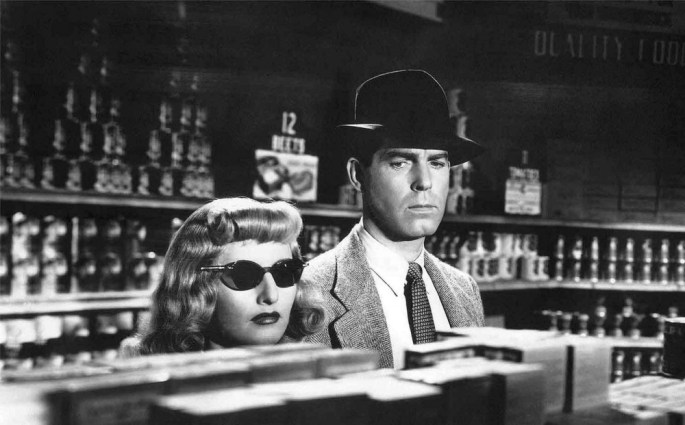
Now, with both neo-noir films Chinatown and Devil in a Blue Dress they both share many similarities with Double Indemnity. All of their stories include a mysterious women that the protagonist must get close to in order to uncover the full mystery. In both the neo noir films however, the woman isn’t essentially a villain or an obstacle to the protagonist; they all work together to solve the mystery. In the neo noir films, the villains are gangs and the wealthy that either force the protagonist to do a deed that they do not want to do or physically block the protagonist from solving the mystery. Devil in a Blue Dress is definitely the most different of the three; the film puts an emphasis on racial division that none of the other films touch upon at all. Not only is Easy dealing with solving the mystery of this women, but he is also dealing with racism. For instance, when getting back to his house after a rough night, he is accused of murdering Corretta, a woman that he clearly cares dearly for; however, due to his race the police treat him violently and doesn’t believe anything he says. Despite this, both neo-noir films take classic noir tropes from Double Indemnity while also incorporating a new type of narrative.
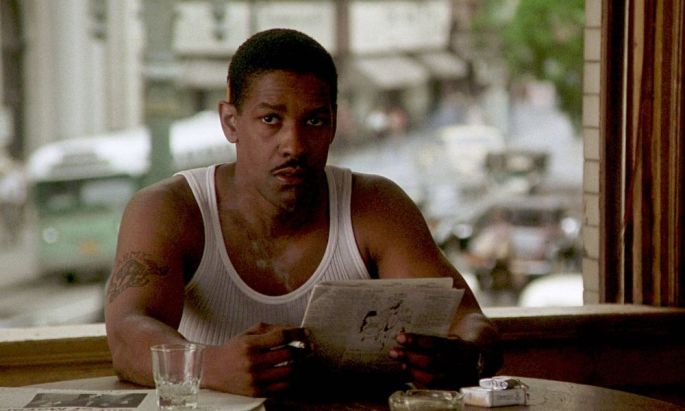
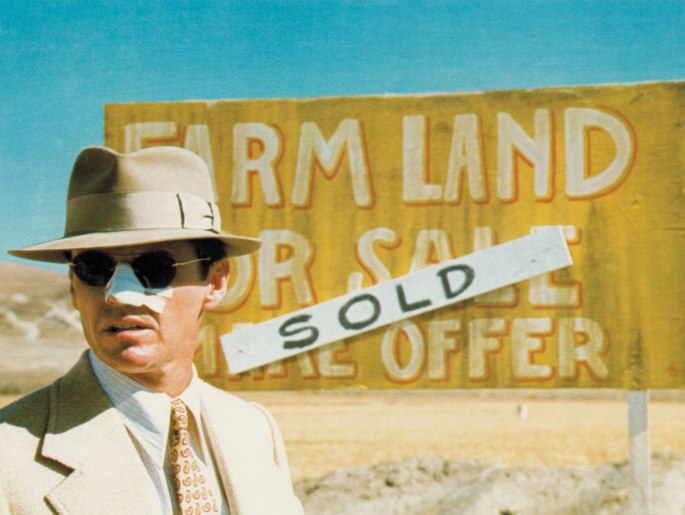
Finally, one trope both noir and neo-noir films have is a urban setting. All these films take place in the city of Los Angeles which plays a central role in the mystery; an obstacle. This is most evident in Chinatown when Detective Gittes loses his car in the middle of the film. After losing his car, it becomes impossible for him to get across the city and slowly falls father behind the mystery. In the end Double Indemnity Walter Neff claims he’s going to flee the city, however Barton Keyes argues “he will never make it”. Lastly, in Devil in a Blue Dress, Easy is sent place to place trying to find Daphne in the city. All in all, the city plays an obstacle the protagonist must physically go through to solve the mystery.
 *Barry B. Benson's voice* "Ya like LA?"
I really like how you compared all three movies not only to each other but individual aspects of each movie as well. Great analysis!
LikeLike
When the detective loses his car, Los Angeles proves to be impossible to explore without a car, it is a necessity. One of the problems with Los Angeles in all three films is the size of it. Yes, they must physically go through the city, but we’re talking about a time when cities in L.A. County were not even cities yet. Picture more cities being part of L.A. itself as opposed to just being part of L.A. county like it is today.
LikeLike
I found it really interesting how you highlighted the expanse of LA in all three films, with Neff being told “he’ll never make it”, or how Gitties struggles to navigate LA without a car, and how in Devil in a Blue Dress, Easy is sent on a scavenger hunt all around the city to find Daphne. Good job!
LikeLike