The End

While taking this class, I found myself visiting LA more often. One thing that surprised me was how many people in the class haven’t visited LA or only visited a few times. I personally explored a lot of LA and seen the beauty it has to offer.

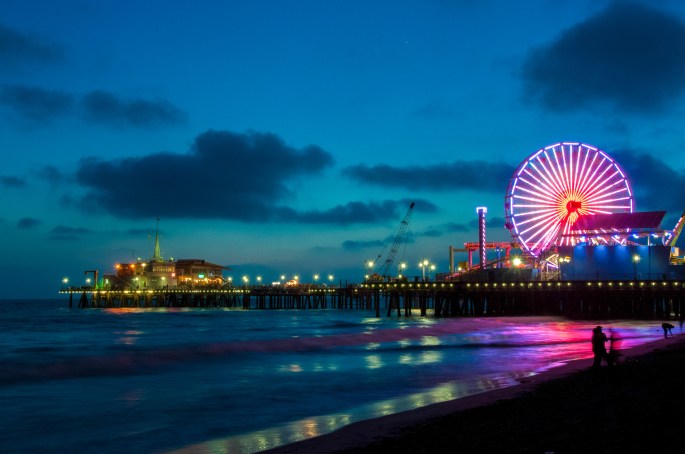
Amusement park on the pier in Santa Monica at night, Los Angeles, California, USA

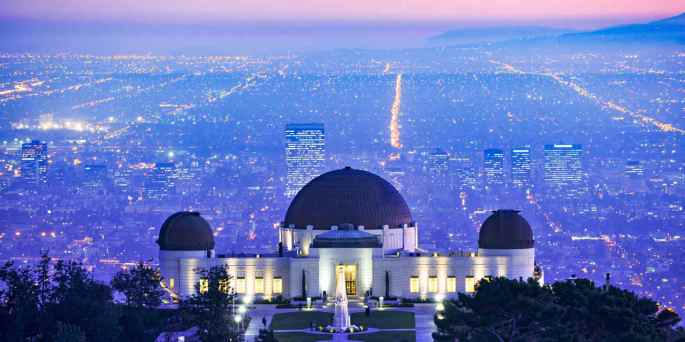
I’ve learned how to view my classmate’s perspectives with an open mind and how to thoroughly research subjects I’m interested in. When working with my classmates, we were able to talk about our different perspectives of a novel or film despite not agreeing with the same interpretation. Speaking up about a topic I’m passionate about, especially when someone might not agree with me, has always been something I’ve had an issue with. In this class, I was able to overcome this issue. Elaborating more on different perspectives, this class has given me the tools to read the city from multiple perspectives. One occurrence, my boyfriend and I took a mini night adventure to Griffith Observatory and Santa Monica. The Griffith Observatory felt very dream-like while in Santa Monica felt crowded and city-like. I was able to go to each place with an open mind and have different, unique experiences.

BLOG

While reflecting on all the films and novels we have read in the class, I had the most fun reading Play It As It Lays by Joan Didion. The complex characters and writing style was something I’ve never read before. I overall had a lot of fun reading the novel. I’ve recommended the novel to many friends and to my past high school teachers as well.

BLOG 2

All in all, I had a lot of fun in this class. I made some awesome friends (shout out to Brian and Nollan!!) and watched some amazing films. I wish everyone good luck on finals! It was a pleasure working with everyone:).

Best,

Angelique

BLOG 4


Accepting One’s Fate

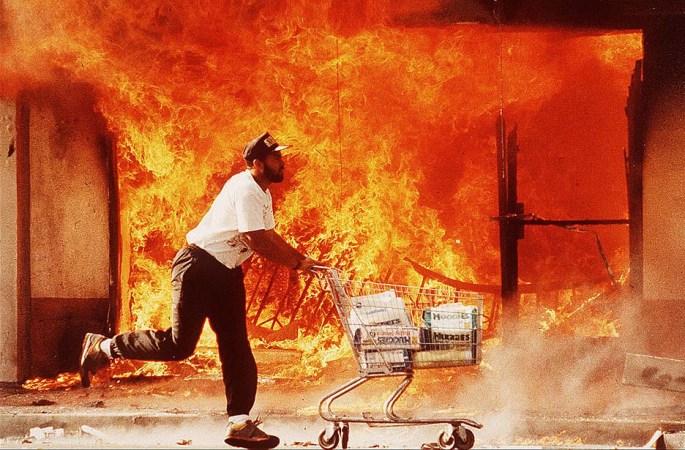
In Ryan Gattis’s novel All Involved, it captures 17 different perspectives during the LA riots in the early 90s. All the perspectives explored are people from different backgrounds with only one thing connecting them: they’re all involved in the chaos of the riots despite their backgrounds. Ray Vera, also known as Lil Mosco, shows a perspective of someone who was involved before the riots began and has gotten his whole family involved as well.

All Involved.png

At the beginning of the novel, the reader learns Lil Mosco is a part of a gang and the youngest brother of his two other siblings Ernesto and Lupe Vera (A.K.A Payasya). Being a part of the gang impacts him and his family. It gets his oldest brother who is not involved with any the gangs killed and makes his sister more involved than she anticipated. To include, Lil Mosco is also killed for being involved in gang corruption. The novel constantly mentions Lil Mosco throughout the first day; however, the novel doesn’t introduce his character until the end of the first day for a brief moment. On the way back from a run they stop at a women’s house for his partner Baseball to have a sexual rendezvous. As Lil Mosco waits for them to finish, he finds out someone has set him up and is confronted by other gang members disguised as the LAPD. As he is face to face with death his final words are, “‘Tell my sister I love her. My brother too. And my mom. Tell them’” (64) and accepts his fate.

All Involved 2

The way Lil Mosco views the destruction of the city is indifferent. He’s been all involved in this violence before the riots began. He willingly accepts his death thinking his family is safe from the chaos. A reason why he joined a gang was to have that reassurance of his family’s safety. As everyone else in the novel is trying to not be involved in the riots or are forced to become involved, Lil Mosco knows he has always been involved and doesn’t run away from his fate.


Pure Lunacy

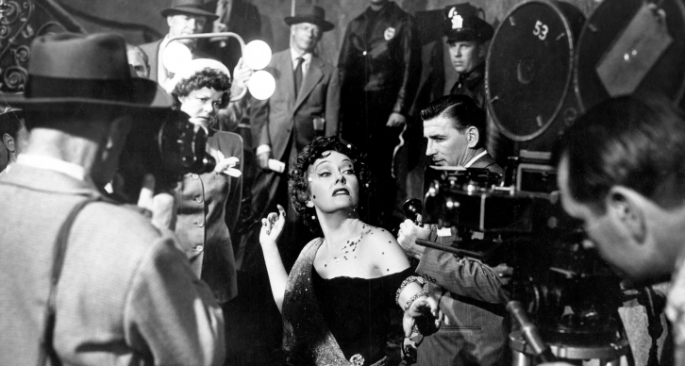
Norma Desmond and Maria both share many hardships as actress’ in LA. They also both go through life turning events that change them for the worse; Norma Desmond gets forgotten by Hollywood while Maria gets ridiculed by her husband in a movie, forced in an abortion, gets her child taken away, and many more traumatic events. In both Play it as it Lays written by Joan Didion and Sunset Boulevard directed by Billy Wilder, they focus on a struggling actress, their deteriorating mental health, and the dark side of Hollywood.

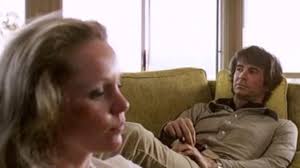
SUNSET B

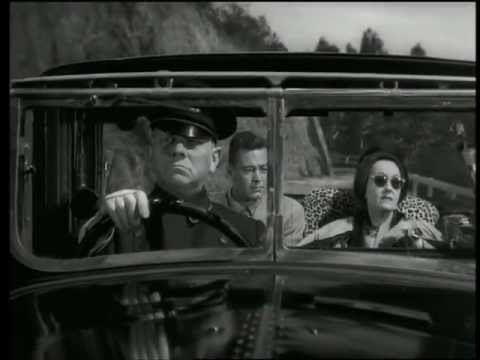
Driving in both texts play a major role in each protagonist’s life. Life turning events occur when the protagonist is in their car or the car takes them to an event. For instance, in Sunset Boulevard when Norma Desmond is taken to Paramount Studios for a “meeting” with Cecil Demille about her new Hollywood “masterpiece” that will jumpstart her new movie career, the audience realizes her dream was just a myth. The studio didn’t call Norma Desmond for her breakthrough script; in reality they called her for her classic, beautiful car. The car conveys that Hollywood is officially done with Norma Desmond and has moved on to better and new talent in the Hollywood industry. As for Maria in Play it as it Lays, not only does her mother die in a car accident, but driving plays an essential role in her overall day-to-day life. In the beginning of the novel the reader views Maria drives every day, if she was not out on the freeway by 10:00 AM, “she lost the days rhythm” (Didion 15). This shows that driving is what helps her cope with the struggles she has in her life. Another time when she is told by Carter to go through with her abortion, she “[sits] in the driver’s seat of the Corvette and cried” (Didion 64). When a life turning event occurs, Maria is always seen in her car. The car is somewhat of a comfort blanket for Maria.

PLAY IT AS IT LAYS

Both protagonist have issues with mental health. Throughout each texts their mental health deteriorates with all the traumatic events occuring. Both texts also show the dark side of the Hollywood movie industry. In Sunset Boulevard, the audience sees Norma Desmond past career as a famous movie star and would be praised for the roles she would play; however, times change and life moves on to better things. Hollywood does this to Norma Desmond and the audience sees how that impacts her mental health throughout the film. As for Maraia, she never becomes a famous movie star, but Hollywood still deteriorates her mental health. Her husband Crater who is a director,  films Maria around New York. At first it is simple and innocent until the finish product shows Maria being drunk, doing drugs, and other actions that show her as reckless and unstable women. The film is so successful that it “[wins] a prize at a festival in Eastern Europe”(Didion, 20). Most people that have seen the film and meet Maria have already made assumptions about her and her life and have judged her. She ends up not being able to play in other roles due to this role. Both texts depict the dark side of Hollywood and how it has impacted each protagonist’s life.

The Lonely Future

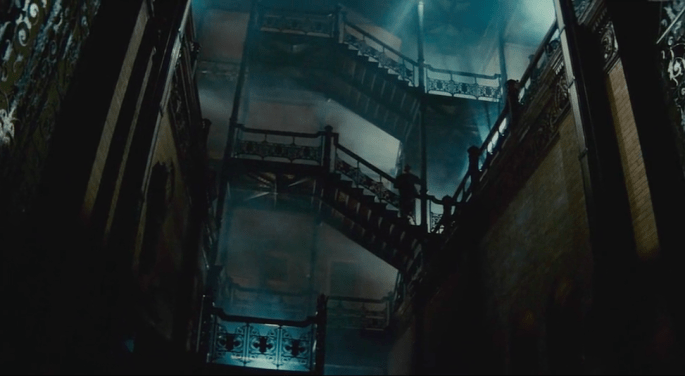
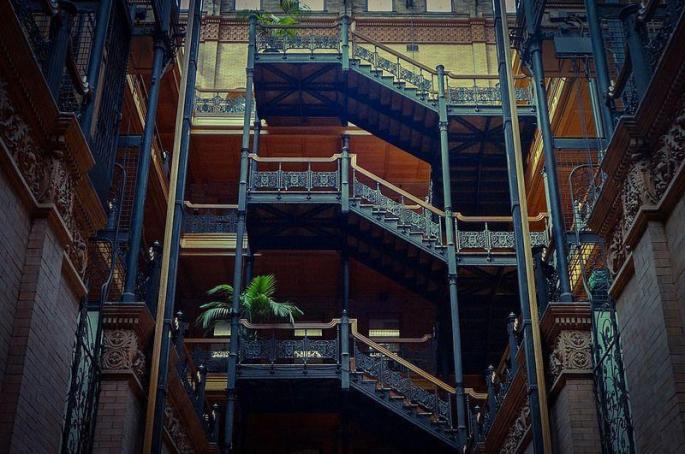
In Ridley Scott’s 1982 film Blade Runner, the Bradbury building is featured throughout the duration of the film, most famously as J.F. Sebastian’s home with ornate and life-like toys. When looking at the original building, the sunroof in combination with the warm orange colors makes the viewer happy and comfortable; however, how the building is filmed in Blade Runner creates the opposite impact. The building is transformed as rundown, dark, uninviting, and abandoned; it provokes the viewer to feel scared and uncomfortable. 

Bradbury-Building_stairs_Blade-Runner_1982

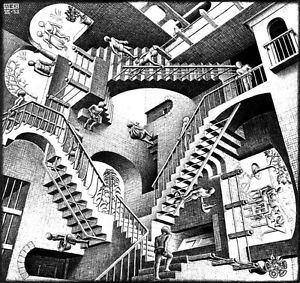
When looking at how the Bradbury film is depicted in Blade Runner, it resembles closely to M.C Escher’s stairs painting named Relativity. As Decker climbs the stairs to the Bradbury building, it makes the viewer uncomfortable throughout the duration of the scene. He is constantly climbing the staircase in hope to find a solution to the mystery; similarly to the people in the painting. Scott utilizes the building to create a mysterious and uncomfortable place for both the protagonist and the audience. It makes one anticipate about the events about to occur.

Blade Runner

As mentioned previously, the building functions as the home for the lonely toy maker J.F. Sebastian; similar to this character, the building is out of place and different from other places in the film. It isn’t elaborately decorated with intricate masonry like Decker’s apartment or illuminated with neon advertisements; it plays its own character and shows the lonely untouched parts of the future. Scott does this to show the different parts of the future that have been impacted. In the future, everything is impacted differently; the Bradbury building conveys the abandoned parts of the future.

Bradbury-Building

Ridley Scott conveys the Bradbury building as an uninviting, dark, and rundown place that provokes the audience to feel uncomfortable and scared. The combination of these attributes convey the lonely and untouched parts impacted by the future.

A Color Can Have Multiple Meanings


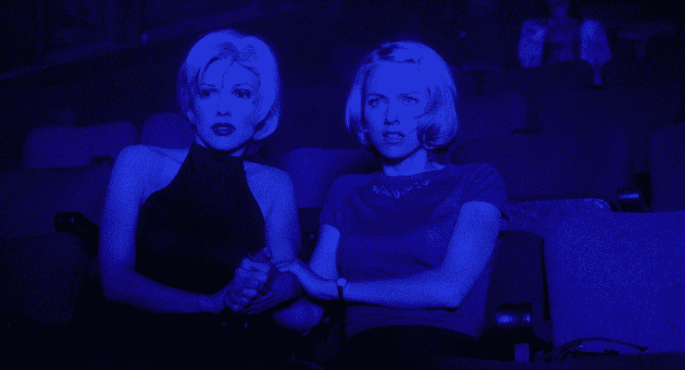
My first reaction to Mulholland Drive was most likely similar to most of my classmates: “What the heck did I just watch???”. Despite this reaction I couldn’t help but become intrigued by the mise-en-scene (meaning everything on screen was put there for a reason). From the the blue key to the old hag, these motifs all play a role in this bizarre film. The motifs that intrigued me the most wasn’t necessarily a repeating object. It was actually the repeating colors blue and red that made me invested of finding the mystery behind this film.

I’ve actually written about colors in films before in my speech and debate club; ironically about the same colors. First, let’s concentrate on the color blue. This color is portrayed as very dark and dreamlike. Many scenes and objects are saturated with the color blue. Objects include: the key, the box, the club Silencio, and the women shown in the last shot from Silencio with the blue hair. The color blue throughout the film symbolizes the dream Diana is in; both the dream she experiences in the first half of the film and her dreams for the future. For instance, the blue key in the real world’s literal meaning is to show when the hit man has killed Camilla; it is also conveying the key to Diana’s future without her – the dream of starting over. Another scene in Silencio both Rita and and Betty are saturated in a blue light. This is a visual cue to the audience that Diana has reached the deepest part of the dream world. The color is also a visual transition from the dream world to reality. This is seen when Rita opens the blue box taking us to Diana’s room in reality. Blue represents is depicted as dreamlike to symbolize Diana’s dreams and the transitions from a dream to reality.

Mulholland-Drive

When picturing the color red, the first image that comes to my mind is fire, passion, love, and countless other hot objects. This is very similar to how the color was utilized in the film. The color red symbolizes both passion and danger. At first thought, both of these are very different; however, they are one in the same. The passion Betty has for Rita leads her on a life threatening journey; this applies also to the passion Diana feels for Camilla in reality. This can be seen visually in the outfits and make-up Rita wears. When Betty first encounters Rita she wears red lipstick and a red towel that Betty lets her use. To include the bed where they share their first kiss is also a deep red. These both convey the passion Betty/Diana feel for Rita/Camilla. The red lipstick also signifies danger. Rita is a dangerous character that leads Betty on a life threatening mystery. Lastly, the main object that signifies danger to the audience is the red lampshade. Whenever the audience sees this object, it implicates an uncomfortable feeling and is always shown when something dangerous is about to occur. The intense dark red signifies a passion shared between the protagonists’ and signifies danger to the audience.

mullholland

Both colors work together throughout the film to create a dreamlike and dangerous place that Diana dreams about. They both convey that one’s mind has the capacity to make up a dangerous place.

Film Noir

Before learning about noir films, we all had a common picture of what these films consisted of: murder mysteries with male detectives trying to solve them. Now, since learning about the noir genre, we have learned that many, many tropes are incorporated to create the image we know as “film noir”.

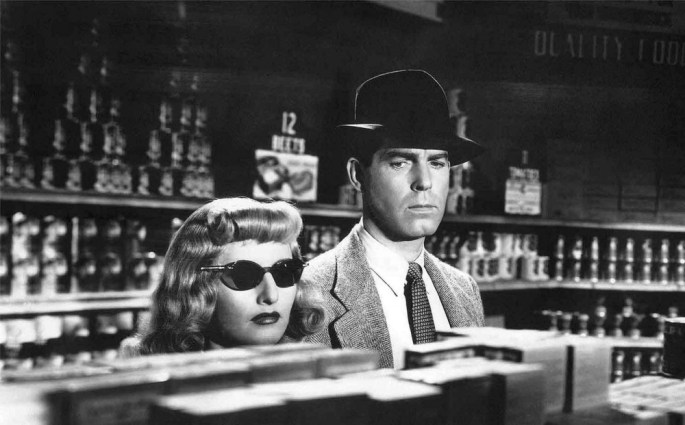
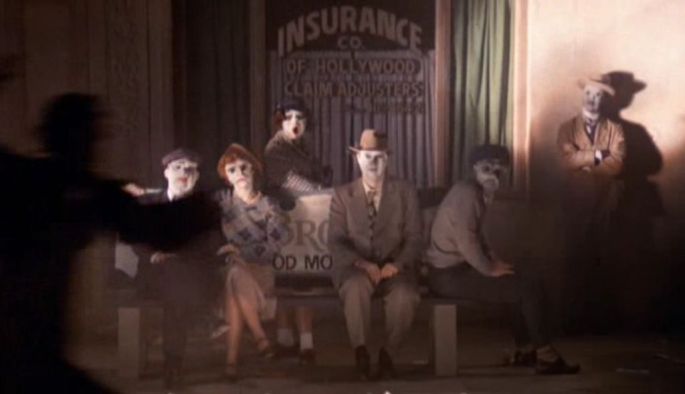
In the classic film noir Double Indemnity, the film includes all of the classic tropes: a mysterious women, a murderous crime to be done, and an urban setting. Phyllis Dietrichson seduces an insurance salesman named Walter Neff to murder her husband because she claims her husband “doesn’t treat her right”. The film isn’t focused on solving a murder mystery, but committing the murder and the mystery of a women’s motivations. The film puts more of an emphasis on the femme-fatale trope than the other films. When reflecting back on all the films, Double Indemnity is the only film where the protagonist’s is killed due to the actions of the women.

DOUBLE-INDEMNITY

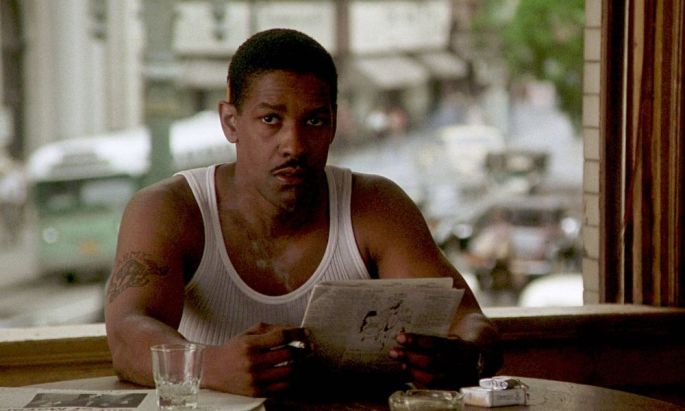
Now, with both neo-noir films Chinatown and Devil in a Blue Dress they both share many similarities with Double Indemnity. All of their stories include a mysterious women that the protagonist must get close to in order to uncover the full mystery. In both the neo noir films however, the woman isn’t essentially a villain or an obstacle to the protagonist; they all work together to solve the mystery. In the neo noir films, the villains are gangs and the wealthy that either force the protagonist to do a deed that they do not want to do or physically block the protagonist from solving the mystery. Devil in a Blue Dress is definitely the most different of the three; the film puts an emphasis on racial division that none of the other films touch upon at all. Not only is Easy dealing with solving the mystery of this women, but he is also dealing with racism. For instance, when getting back to his house after a rough night, he is accused of murdering Corretta, a woman that he clearly cares dearly for; however, due to his race the police treat him violently and doesn’t believe anything he says. Despite this, both neo-noir films take classic noir tropes from Double Indemnity while also incorporating a new type of narrative.

devil-in-blue-dress

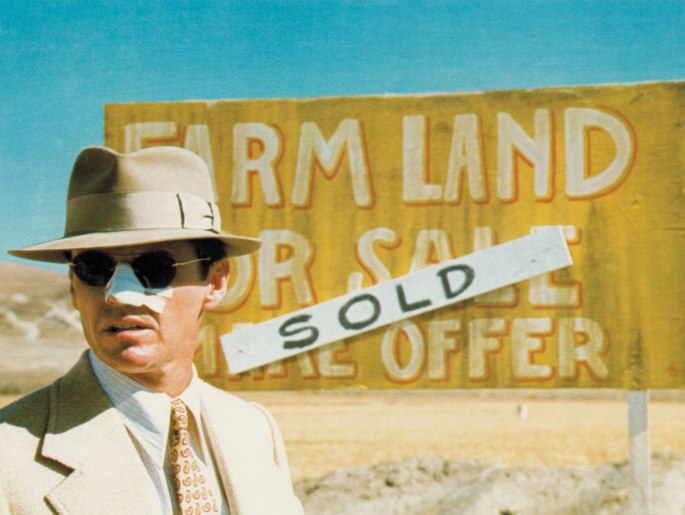
Finally, one trope both noir and neo-noir films have is a urban setting. All these films take place in the city of Los Angeles which plays a central role in the mystery; an obstacle. This is most evident in Chinatown when Detective Gittes loses his car in the middle of the film. After losing his car, it becomes impossible for him to get across the city and slowly falls father behind the mystery. In the end Double Indemnity Walter Neff claims he’s going to flee the city, however Barton Keyes argues “he will never make it”. Lastly, in Devil in a Blue Dress, Easy is sent place to place trying to find Daphne in the city. All in all, the city plays an obstacle the protagonist must physically go through to solve the mystery.

Chinatown

The Illusion of Hollywood

When someone mentions “Hollywood” most think about the luxuries and the glamour of the place; however, most do not know the feeling of having these luxuries and even worse, losing all of it once working so hard to obtain it. All stories discussed in the blog feature a protagonist that have experienced these luxuries, but with a cost that ultimately makes them unhappy in the end.

In Billy Wilder’s Sunset Boulevard, Norma Desmond, a former silent film star has a luxurious home and has experienced the attention and “glam” Hollywood has offered. Despite this, she is constantly trying to gain the “glam” she experienced so long ago back into her life again. Hollywood is depicted in the film as ruthless and unforgiving. Despite working so hard to earn the spotlight, it can be taken away in an instant. One scene in particular shows Norma Desmond visiting Paramount and is noticed by the cast as a spotlight shines on her as everyone praises her. In this scene everyone that notices her only knew who she was, not who she is now; one person even says, “I thought she was dead”. This fuels Norma’s delusions as she constantly works harder to earn the spotlight she thinks she deserves. In the end, Hollywood doesn’t care what Norma Desmond creates. All they care about is the next new things conveying the illusion of the “glamour” of HollywooBLOG 3


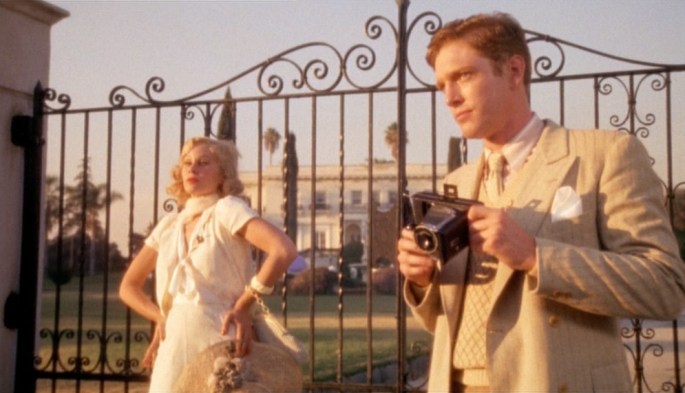
Now, in William Faulkner’s short story “Golden Land”, it follows a man named Ira who has given up his immortality to become successful in Hollywood. Ira is somewhat of a hypocrite throughout the story; despite hating the consumer culture in Hollywood, he is willing to do anything to become successful. Similar to Norma Desmond, Ira’s daughter, Samantha, is also willing to do anything to earn the spotlight they think they deserve. When Ira is speaking to his mother about his daughter’s situation he claims, “ ‘Can’t you understand that you can’t get into the pictures just by changing your name? And that you don’t even stay there once you get in?’ “ (141). This supports both Wilder’s and Faulkner’s views of Hollywood; people are willing to do anything to have the “glamorous” life Hollywood portrays.  

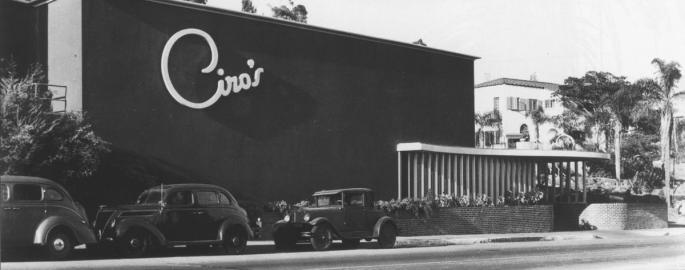
Lastly in the short “A Table At Ciro’s” by Budd Schulberg, it follows a famous producer named A.D. Nathan and staff and patrons working in Ciro’s craving his attention. The patrons at Ciro’s praise A.D. Nathan throughout the short story, when he comes to Ciro’s they explain he brings the patrons “a little closer to the Hollywood that was like a mirage, always in sight but never within reach.” (273). The patron’s view this man as their ticket into the “glamorous” Hollywood life; however, they don’t view him as a real person who worked hard – of even harder – to achieve this success. In the end, A.D. Nathan loses everything and is now an equal to all the patrons in Ciro’s.

ciros1941

All the protagonist in each story earn their spotlight at a great lost; Norma Desmond is forgotten by Hollywood, Ira loses his mortality for success, and A.D. Nathan loses all of his luxuries in matter of seconds. All stories depict the “glamorous” Hollywood as an illusion that inhabitants work so hard for and remain unsatisfied.


Destruction of One’s Self Identity

In Nathanael West’s novella Day of the Locust, it follows a young, bitter artist named Tod Hackett who discusses how he views the people and the experiences he has in the city of Los Angeles. Throughout the novel he paints the city in chaos named “The Burning of Los Angeles” that is constantly brought up until the end of the novella where the mob he is experiencing imitates his painting. In the mob the people do not only destroy the city they inhabit, but also destroy their self identities and a sense of their own individuality.

DOTL2

Tod’s perception of the city shifts back and forth from being both interested about the city itself to being disgusted by the inhabitants of the city. Throughout the novella he elaborately describes his surroundings “The edges of the trees burned with a pale violet light … outlines the tops of the ugly, humped-backed hills and they were almost beautiful.” Despite Tod describing his surrounding in a mostly negative way, he is still elaborately looking at his surroundings and even admitting it is beautiful compared to how he describes the people. For instance, in the beginning of the novella when Tod meets eyes with others in the city he describes their eyes as “filled with hatred”. Tod is disgusted by the people in Los Angeles and cannot even see the good in people compared to how he describes his surrounding.

The way Tod views people is also seen in the painting he is constantly working on throughout the novella. When Tod thinks about his painting during the mob he describes the people  “spilling into the middle foreground, came the mob carrying baseball bats and torches… No longer bored, they sang and danced joyously in the red light of the flames.” Tod paints the main focus on the people of the city by putting them in the foreground and the destruction in the background. This foreshadows the ending of not only the destructive mob that gets out of hand, but the destruction of how Tod views all of society. Tod describes the faces of the people in the painting as “innumerable sketches he had made of the people who have came to California to die”. Tod does not see individuals as people with complex characteristics and goals anymore. He views them merely as sketches in his painting that only know how to destroy the things around them. The mod has destroyed their sense of individuality and Tod only sees the mob as one, destructive thing.  

DOTL

All in all, “The Burning of Los Angeles” not only foreshadows the ending of the novel, but how Tod views society at the end of the novel. The different disaster the transpires is the mob destroying their self identity. They are not people with complex feelings capable of love anymore, they are now sketches just filled with hatred and that only know how to destroy the things around them.

Changing Perceptions (Blog 1)

Describe your current thoughts of the class so far. If you are from southern California, write about your experiences with Los Angeles and how they have shaped your understanding/memory of the city. If you are not from Southern California, please write about any preconceived notions that you may have about Los Angeles and address any specific texts (books, films, music, TV shows, etc.) that have contributed to your current perception of the city. 

Being a Southern Californian native, I grew up visiting Los Angeles very often. I still remember the first time I visited Los Angeles. It was my 7th birthday party and my parents rented a limo for me and all my best friends to visit the American Girl Doll store in the Grove. Upon approaching the doll wonderland, my friends and I spotted the Hollywood sign. If you heard us you would have probably thought we were being murdered. Until then, the Hollywood sign was something we only saw in the movies or Disney Channel shows, so seeing the real sign blew our small brains to pieces!

Now, after that experience, I viewed Los Angeles as a place where aspiring actors and actresses (let’s also not forget the people dressed up as Disney characters that try to get money from tourists) go to try to achieve their dreams of being famous. At one point I even was scared to go to Los Angeles. When I was about 10 years old I saw a homeless man yelling at a wall and on the metro I even witnessed a fight. After that, I found myself visiting less and less. If I am being honest, for a while I would only go to Los Angeles when Anime Expo came around (please don’t judge me).

My perception of Los Angeles stayed like this for a very, very long time until my junior year of high school. I witnessed the most amazing film that not only made me want to study film in college, but made me want to explore and discover Los Angeles. The film was La La Land; If you didn’t tell from my URL, La La Land is my favorite film of all times. I saw this film about five times in theaters and countless times on my own TV. After seeing this film I found myself being in Los Angeles exploring the city with my friends and parents more often. If I’m being completely honest the reason why I took this class was because of the film that has made me fall in love with the city.

Whenever I find myself in the city I always tend to imagine this scene in my head

https://www.youtube.com/watch?v=puLfYRobgQc

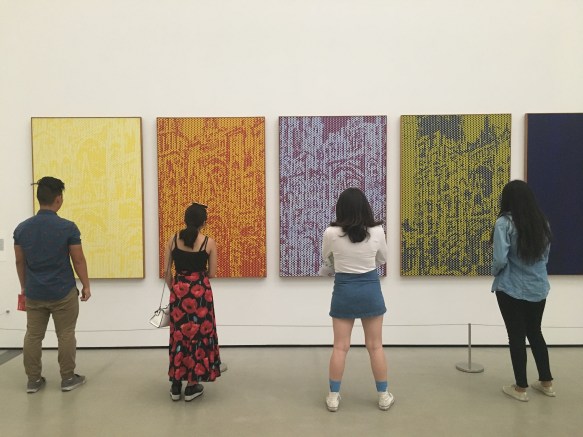
This summer, I actually took a lot of day trips to from Long Beach to Los Angeles with my friends. We decided to take the metro because not only is it better for the environment, but none of my friends could drive (again, please don’t judge me) or wanted to deal with Los Angeles parking. The one trip I remember clearly is after graduation me and my friends from AP art history decided to be the art geeks we were and take the metro to the Broad. Despite the stereotype of people not knowing the metro system or walking in the city, I actually know my way very well. One thing that made the trip rememberable was looking at all the architecture. Since I love studying art history I was able to spot the different architecture in the city and appreciate it.
 

IMG_7108

Now, the question you all have been waiting for… “What are my current thoughts about this class?” well… It is actually a very easy going and fun class so far! Despite not talking that much during the class, I enjoy listening to my classmates experiences. Professor Atalia Lopez also makes the class very interesting with her jokes and different perspectives of the city that I have not experienced. I am very excited about what else the class has in store for us! (I really can’t wait to watch Mulholland Drive especially!!)